Custom Travel Itinerary! WeChat/WhatsApp: +8613811531028
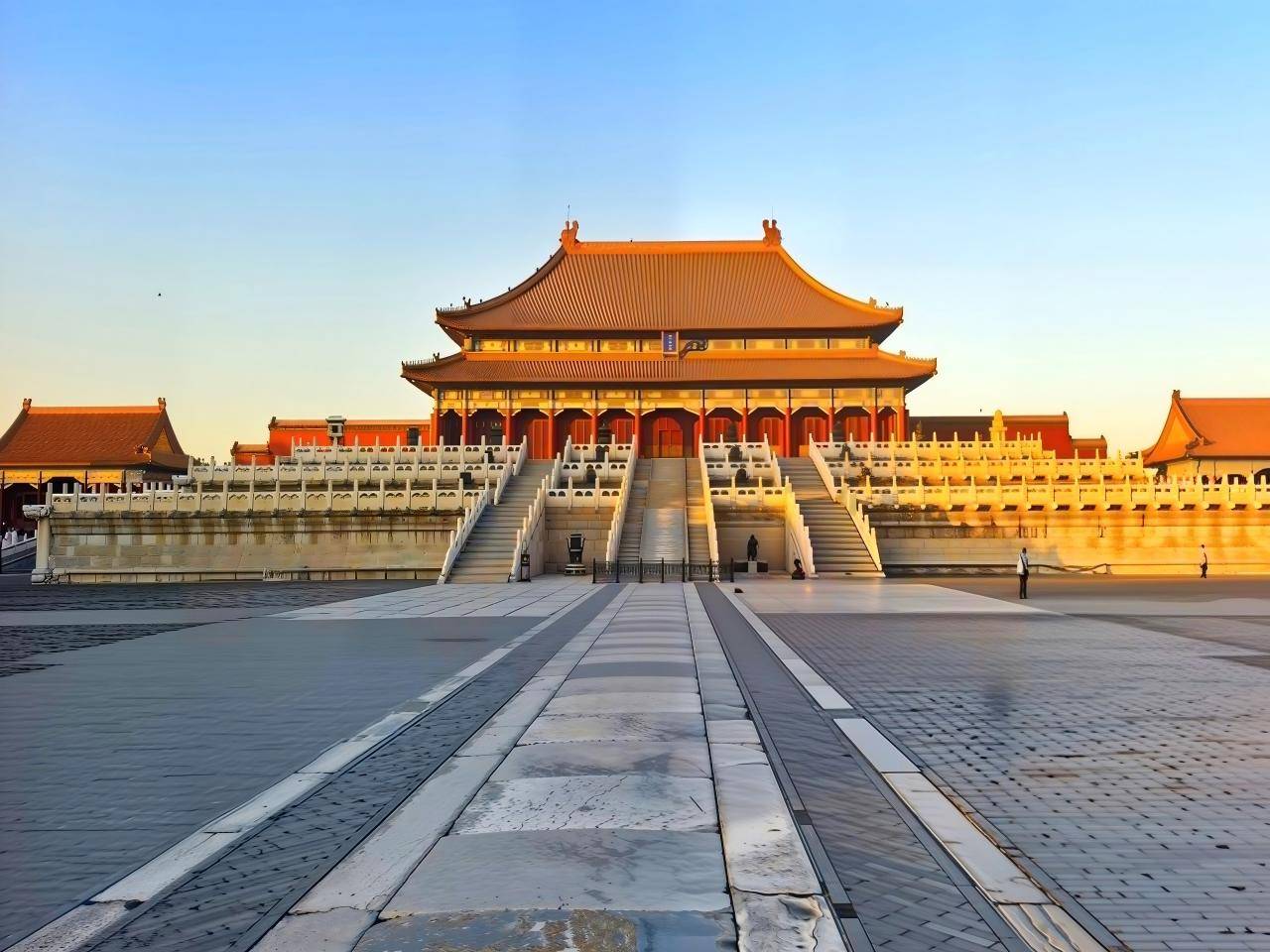
Beijing, the capital of the People's Republic of China, it is not only the nation's political center, but also a cultural, scientific and educational heart as well as a key transportation hub. Beijing has served as a capital of the country for more than 800 years. The city has many places of historic interest and scenic beauty, including the Forbidden City - the largest and best-preserved ancient architectural complex in the world; the Temple of Heaven - where Ming and Qing emperors performed solemn rituals for bountiful harvests; the Summer Palace - the emperors' magnificent garden retreat; the Ming Tombs - the stately and majestic mausoleums of 13 Ming Dynasty emperors; and the world-renowned and genuinely inspiring Badaling section of the Great Wall. Large-scale construction has brought great changes to Beijing since the foundation of the People's Republic of China in 1949 that adds more and more new attractions to the mysterious old city. The city also has a character all its own; there are quadrangles, Hutongs, tricycle, boiled mutton, arts and crafts, roasted duck and Peking Opera.


Basis Information
• Chinese Name: 北京
• Location: North of China
• Dialing code: (+86) 010
• Zip code: 100000
• Beijing Gov website: http://www.beijing.gov.cn/
• Main attractions in Beijing: Tiananmen Square, Forbidden City, Temple of Heaven, Summer Palace, Badaling/Mutianyu Great Wall, Ming Tombs, etc.
Geographical Location
Beijing Municipality covers an area of 16,410.54 square kilometres (sq.km). Nestled on the north of the North China Plain, it borders Tianjin Municipality on the east and Hebei Province in all other directions. The Western Hills, west of Beijing, are branches of the Taihang Mountains while the Jundu Mountain, north of the city, is a part of the Yanshan Mountains. They intersect at Beijing's Guangou Valley, shaping a giant semi-circle curve opening to the southeast. This curve is called "Beijing Bay." All these tell us why Beijing has been acclaimed as a land of peace and prosperity since ancient times.
Topographic Features
Beijing has a higher northwest part and a lower southeast part. It is surrounded by mountains to its west, north and northeast. To its southeast, the North China Plain gradually descends towards the Bohai Sea. Mountain areas occupy about 62 percent of the municipality's total area. The Dongling Mountain, 2,303 metres above sea level, is Beijing's highest mountain. Five major waterways from west to east flow through the municipality: the Juma, Yongding, Beiyun, Chaobai and Jiyun rivers.
Climate
The capital has a temperate, continental monsoonal climate, characterised by short spring and autumns, hot and rainy summers, and cold and dry winters. Its average annual temperature is 11 to 14 degrees Celsius. Around 75 percent of its annual precipitation occurs in summer, with the heaviest rainfall in July and August.
Time Zone
Beijing is located in Greenwich Mean Time Zone 8(GMT+8). It is eight hours earlier than London (GMT+0). The whole of China adopts "Beijing time" as its standard time.
City Trees
The city trees of Beijing are the Chinese scholar tree and the arborvitae. As a symbol of Beijing's far-reaching civilisation, they are among the municipality's main species of trees, and both have a long cultivation history here. The Chinese scholar tree is suited to Beijing's meteorological and soil features. It is a sunshine lover, characterised by resistance to droughts, high temperature, saline, alkaline and soil compaction. It is well adapted to urban soil with debris. As Beijing's oldest shade tree, the Chinese scholar tree is celebrated as the "king of shade trees." Peculiar to China, the arborvitae is a species of evergreen arbor. It is characterised by resistance to cold weather and droughts, delicate fragrance and a long life. Arborvitaes grow luxuriant in imperial parks, gardens, altars and temples, creating picturesque scenery in a solemn atmosphere.
City Flowers
The city flowers of Beijing are the Chinese rose and the chrysanthemum. Also named yueyuehong ("red every month"), the Chinese rose is a native species of flower to China. It has a cultivation history of more than 1,000 years. The Chinese rose, hailed as the "queen of flowers," is one of China's ten famous blossoms. The plum blossom, orchid, bamboo and chrysanthemum are regarded as "four gentlemen" mainly because of their strong nature and elegance. The chrysanthemum, originating in China, has a cultivation history of over 3,000 years. Even though it frosts, the chrysanthemum does not fade easily. Representing the unyielding character of Beijingers, the chrysanthemum became the city flower of Beijing. Beijingers promote a traditional high level of applying chrysanthemums to ornamental moulds.